Tektronix Introduces World’s First 8-Channel 25 GHz Oscilloscope Featuring High-Performance Computing Architecture

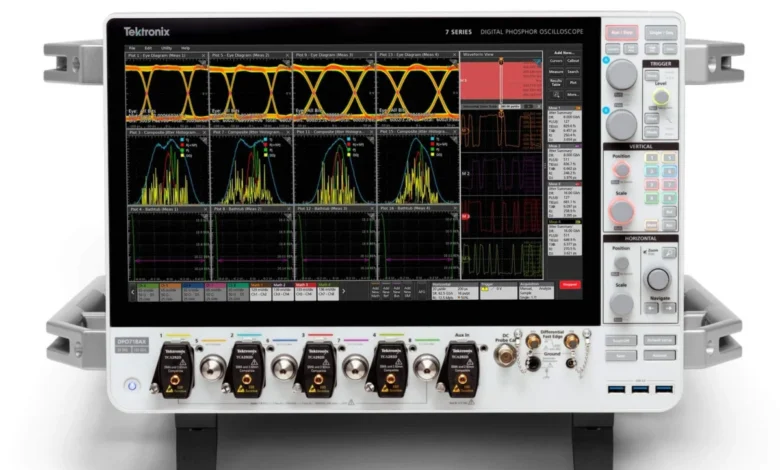
Tektronix has officially expanded its flagship 7 Series digital phosphor oscilloscope (DPO) line with the launch of the DPO718AX, a cutting-edge instrument that has sparked widespread interest for its unique integration of high-performance computing hardware. While the oscilloscope is designed primarily for precision engineering, signal integrity analysis, and high-speed data acquisition, its reliance on a robust, PC-based architecture has invited scrutiny regarding the intersection of specialized laboratory instrumentation and general-purpose computing.
The new DPO718AX represents a significant engineering milestone, offering eight channels with a 25 GHz bandwidth—a configuration previously unseen in this form factor. However, the device’s internal specifications have garnered as much attention as its measurement capabilities. At the heart of the system lies a 12-core AMD EPYC embedded processor, supported by 96GB of DDR4 memory, an Nvidia T1000 workstation-class graphics card, and a removable 1.6TB NVMe SSD. These components are housed within a substantial 38.1kg chassis, featuring a 15.6-inch 1080p touchscreen interface that serves as the primary control surface for the unit.
A Convergence of Instrumentation and Computing
In the realm of high-end test and measurement equipment, the integration of x86 architecture is not entirely new. Modern oscilloscopes have long moved away from proprietary, limited-function hardware toward flexible, OS-driven systems that can handle complex post-processing and compliance testing. The DPO718AX, however, pushes this paradigm to new heights. By utilizing a 12-core AMD EPYC CPU, Tektronix has essentially built a high-performance workstation directly into the measurement chassis.
Industry analysts have observed that the choice of the AMD EPYC Embedded 3351 processor suggests a design philosophy centered on stability and multi-threaded processing rather than raw clock-speed dominance. The processor, which utilizes the first-generation Zen microarchitecture and was originally released in 2018, provides the necessary computational throughput to manage the massive data streams generated by eight 25 GHz channels simultaneously. The inclusion of 96GB of RAM allows for deep memory buffers, which are essential when performing long-duration signal captures or executing complex mathematical transformations on high-speed waveforms.
Hardware Specifications and Performance Limitations
Despite the industrial-grade performance required for laboratory applications, the hardware choices in the DPO718AX have been characterized by some observers as "dated." The AMD EPYC 3351, while capable, is not a contemporary chip, and the reliance on PCIe 3.0 connectivity and DDR4 memory highlights a focus on proven reliability over bleeding-edge consumer performance.
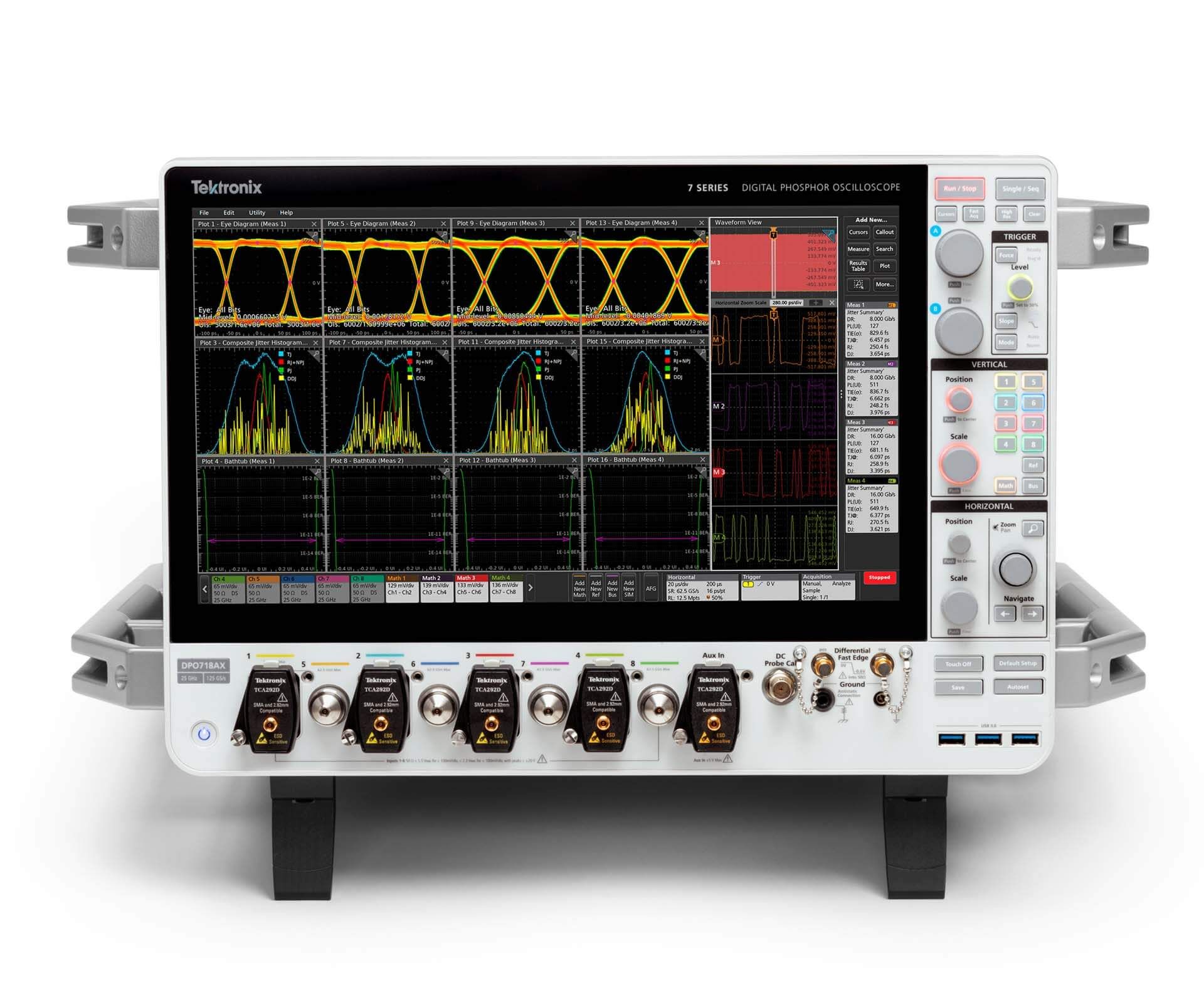
The Nvidia T1000 GPU, based on the Turing architecture and released in May 2021, is designed for stable, multi-display professional workstation environments rather than gaming or intensive 3D rendering. For an oscilloscope, this is a strategic choice; the GPU’s role is to facilitate the rapid rendering of complex waveforms and real-time data visualization on the 1080p touch display, rather than to maximize frame rates. The system supports video output up to QHD resolution via DisplayPort, though it is capped at a 60Hz refresh rate—a standard specification for laboratory instruments where visual fidelity and accurate representation of data are prioritized over high-motion responsiveness.
Software Architecture and Compliance Requirements
The operating system strategy for the DPO718AX is specifically tailored for the rigors of professional testing environments. The unit does not ship with a pre-installed OS, but rather supports Windows 10 LTSC (Long-Term Servicing Channel) 2021. This choice is deliberate. LTSC versions of Windows are designed for fixed-purpose systems where stability is paramount, avoiding the frequent, disruptive updates found in standard consumer Windows releases.
This software environment is critical for the DPO718AX’s primary function: compliance and RF analysis. Many industry-standard compliance software suites—such as those used for verifying high-speed serial bus standards—are built exclusively for the Windows environment. By utilizing a standard PC architecture, Tektronix allows engineers to run these software packages natively on the oscilloscope, eliminating the need for external PCs or cumbersome data-transfer workflows.
While the system is technically capable of running Windows 11 due to its integrated TPM 2.0 support, industry experts emphasize that the hardware is not designed to function as a traditional PC. Attempting to use the DPO718AX as a general-purpose workstation would be inefficient and prohibitively expensive, given the unit’s primary purpose as a high-precision measurement tool.
Historical Context and Evolution of the 7 Series
The evolution of the Tektronix 7 Series mirrors the broader shift in the electronics industry toward "software-defined" hardware. Over the last decade, as serial data rates have climbed from the megabit range into the multi-gigabit domain, the demand for oscilloscopes that can perform real-time analysis has skyrocketed.
Chronologically, the DPO line has consistently moved toward more modular, PC-like architectures. Early iterations of digital oscilloscopes were limited by their onboard processing, often requiring external computers to perform even basic analysis. The introduction of the 7 Series marked a transition where the oscilloscope became a self-contained compute node. The move to an 8-channel, 25 GHz configuration is the latest step in this progression, acknowledging that modern engineers are often testing multi-lane interfaces (such as PCIe 5.0 or 6.0) that require simultaneous monitoring of more channels than traditional 4-channel scopes could provide.
Market Implications and Future Outlook
The release of the DPO718AX arrives at a time of constrained supply chains and shifting requirements for high-bandwidth testing. The instrument’s price point, while not publicly fixed as a flat rate due to the custom nature of such equipment, is expected to be in the range of several hundred thousand dollars. For research institutions, aerospace companies, and semiconductor manufacturers, the cost is secondary to the capability to capture and analyze signals with unprecedented precision.
The choice of using older, stable components like the Zen-based EPYC processor and the Turing-based T1000 GPU is likely a calculated decision by Tektronix to ensure longevity and supportability. In a professional laboratory setting, an instrument is expected to remain in service for a decade or more. Utilizing "battle-tested" hardware reduces the risk of driver incompatibility or unforeseen component failure that might plague newer, less mature architectures.
Conclusion
The Tektronix DPO718AX stands as a testament to the increasing complexity of modern signal analysis. By blending a high-bandwidth, 8-channel acquisition system with an enterprise-grade computing foundation, Tektronix has addressed the specific needs of engineers working at the cutting edge of data communication and hardware design.
While the use of older PC hardware has invited discussion regarding the "PC-like" nature of the device, it ultimately reflects a pragmatic engineering strategy. The priority for such a device remains accuracy, reliability, and compatibility with essential testing software. As high-speed interfaces continue to dominate the technological landscape, the DPO718AX serves as a critical bridge between physical signal acquisition and the sophisticated, software-driven analysis required to bring next-generation products to market. Whether this trend toward increasingly powerful internal computing will continue in future oscilloscope generations remains to be seen, but for now, the DPO718AX sets a new standard for integration in the high-end instrumentation market.